

































































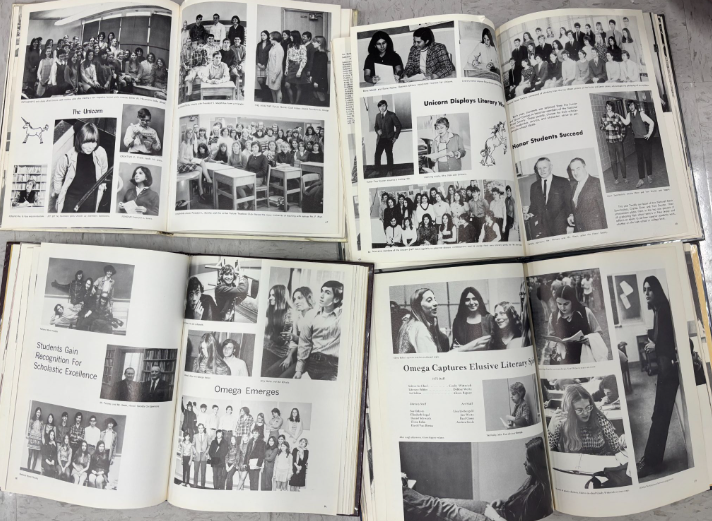
In the early 1970s, the halls of Tenafly High School were quiet, but resistance was already happening. Not in protests. Not in chants. Not on the streets. It was happening at desks, in notebooks, in the margins of loose-leaf pages passed between students who didn’t yet know they were making history.
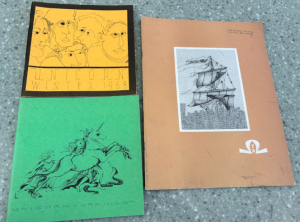
As protests surrounding the Vietnam War rippled outward through campuses and cities, Tenafly students found a different way to respond. Interestingly, their resistance unfolded on the page. At the time, the school’s literary magazine was known as Unicorn, a title that appeared on its cover until 1971. But during the height of national unrest, students chose a new title—Omega, after the final letter of the Greek alphabet and a symbol for resistance.
The name was deliberate. Produced throughout the year and printed near graduation, Omega became a final statement for students preparing to leave Tenafly High School behind. Its pages carried poems, stories, and artwork shaped by uncertainty, questioning, and the desire to be heard. Over time, the magazine became less about any single protest and more about preserving a spirit of intellectual independence.
A defining shift came in the late 1990s, when THS English teacher Mr. Gary Whitehead became the magazine’s advisor. Drawing on his experience editing literary journals, Whitehead transformed Omega’s presentation. The publication adopted a 6×9 format with perfect binding, giving it a clean, flat spine and a book-like presence that elevated it beyond a typical high school magazine. That format remains in place today, lending Omega a timeless, sophisticated feel.
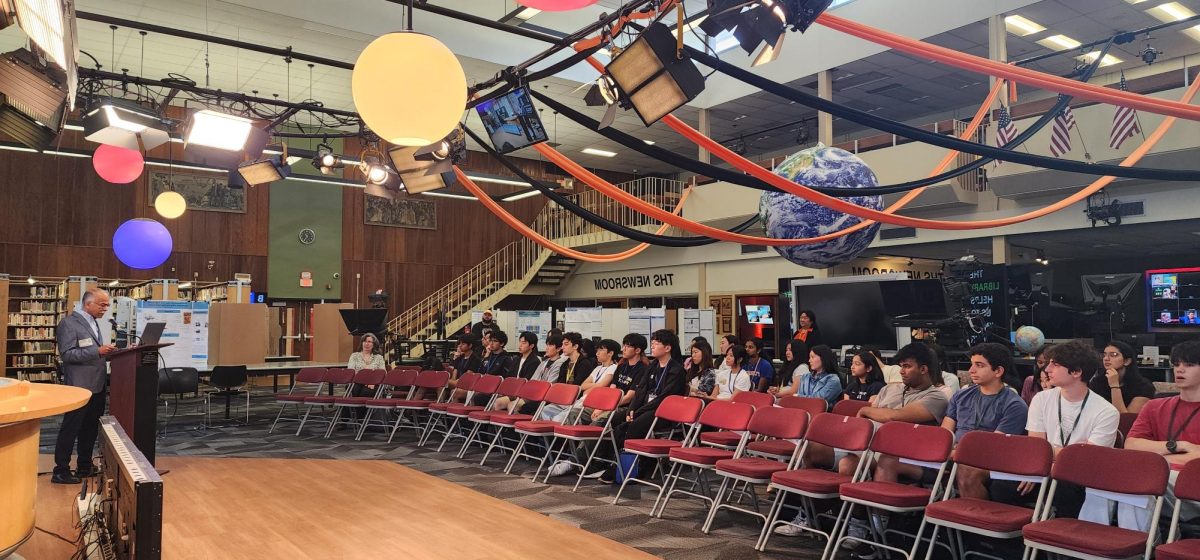
At the same time, creative writing in Tenafly High School expanded significantly. What had once been a single elective course expanded to four levels (courtesy of Whitehead’s proposal and the Board of Education’s approval), allowing students to pursue creative interests throughout all four years. The effects were immediate: submissions surged, and club membership ballooned to 30 to 40 in certain years. Desks were pushed together, ideas bounced across tables, and everyone wanted to be a part of the blossoming environment. For a period, the annual Omega Night brought the magazine off the page and into the school library after hours, where students gathered for readings and performances, the mundane, book-lined space shifting into a vibrant space for shared voices.
Despite decades of change in design, technology, advising, and student culture, Omega’s core mission has remained constant. The magazine is open to submissions from all students, led by a board of student editors, published annually, and distributed free throughout the school community.
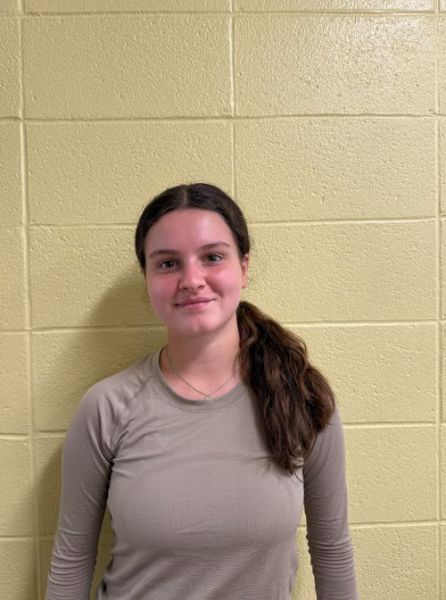
“I think what’s beautiful about [Omega] is that we take work from so many people—so many different pieces of writing or art—and find a way to organize the madness into a small book like puzzle pieces,” Rotem Landau (’27), an editor for Omega, said. “I love seeing how, throughout the year, one by one, the book comes to life from zero to whole.”
Omega is uniquely student-run, which infuses it with a distinctive voice. Unlike polished professional outlets such as The New Yorker, where pieces by experienced writers undergo assiduous editing and fact-checking for maximum refinement, Omega embraces the freshness of emerging voices. Readers may encounter the occasional misspellings or rough edge, but they also discover enthusiasm, wonder, and an unfiltered authenticity that professional publications cannot replicate.
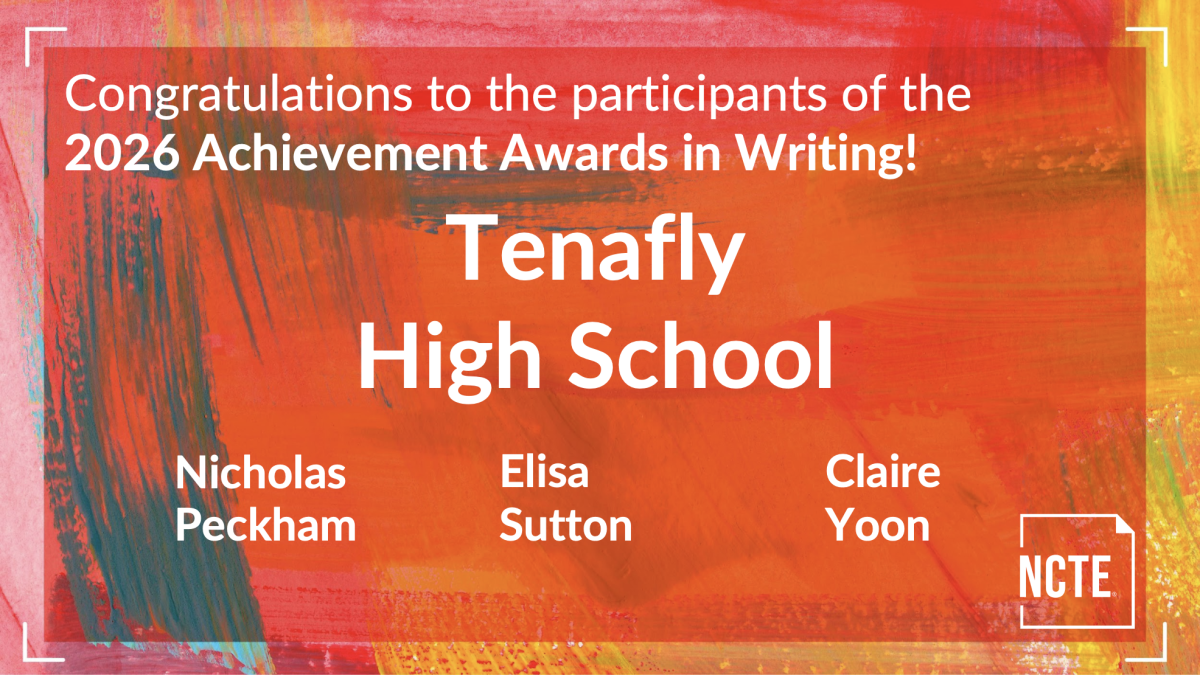
In 2025, with the help of Omega‘s advisor, Mrs. Lauren Malanka, the literary magazine received a “Superior” distinction from the National Council of Teachers of English, one of the highest honors awarded to student literary magazines nationwide. The recognition evaluates publications on editorial quality, originality, and coherence, placing Omega among a small group of exemplary student-run publications. For a magazine produced nearly entirely by students—many first-time writers or editors—the award affirms not only the strength of the work itself but also the rigor of the process behind it.
“This recognition is so well deserved,” Whitehead said. “It speaks to [the students’ creativity] and eagerness to express themselves.”
At a time when creative writing programs face shrinking resources, the distinction highlights the continued relevance of careful, student-driven literary work.
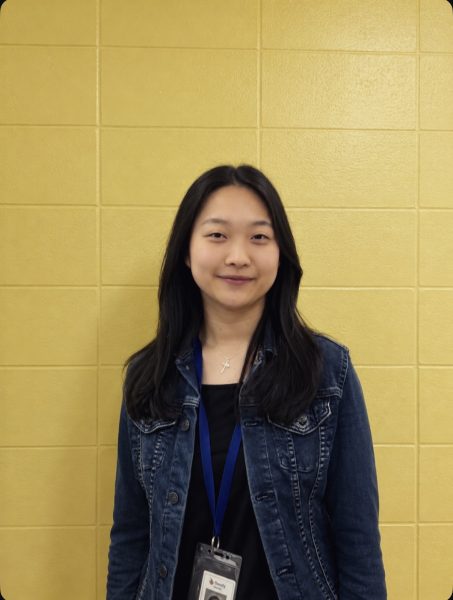
As for this year’s issue, “So far, there has been a wide range of submissions, from short poems to longer essays,” interim advisor Ms. Alexandra Helmis said. “The artwork is also varied and includes paintings, photography, and sculpture. While it’s still early to define a tone, the issue is shaping up to be a strong reflection of what Tenafly students are capable of in both art and original writing!”
The range of voice, form, and feeling is exactly what gives Omega its power. This student-driven quality directly informs how literary magazines attract and involve readers, fostering authentic connections.
“Literary magazines and journals engage readers emotionally through their storytelling and careful artistry,” Whitehead said. “Whether it be a poem, a story, or an essay, the piece is usually well-developed, artful, and rich, inviting rereadings and careful engagement and study. I would argue that we need more of this in the age of TikTok and X, where the focus encourages a short attention span.”
In 2026, as digital distractions and shortening attention spans compete for young minds, school magazines like Omega still carry a profound impact. They preserve the value of slow, thoughtful writing and art by celebrating creativity within the student body, providing a rare space for navigation in moments of joy, doubt, identity, loss, and wonder. Omega keeps the flame alive, one issue at a time.