





























































While past members of The Echo carried the paper’s legacy with them to future years (as explored in “Tenafly’s Student Newspaper over the Years (Part I): Alumni Ver.”), recent years have been defined by preservation combined with momentum.
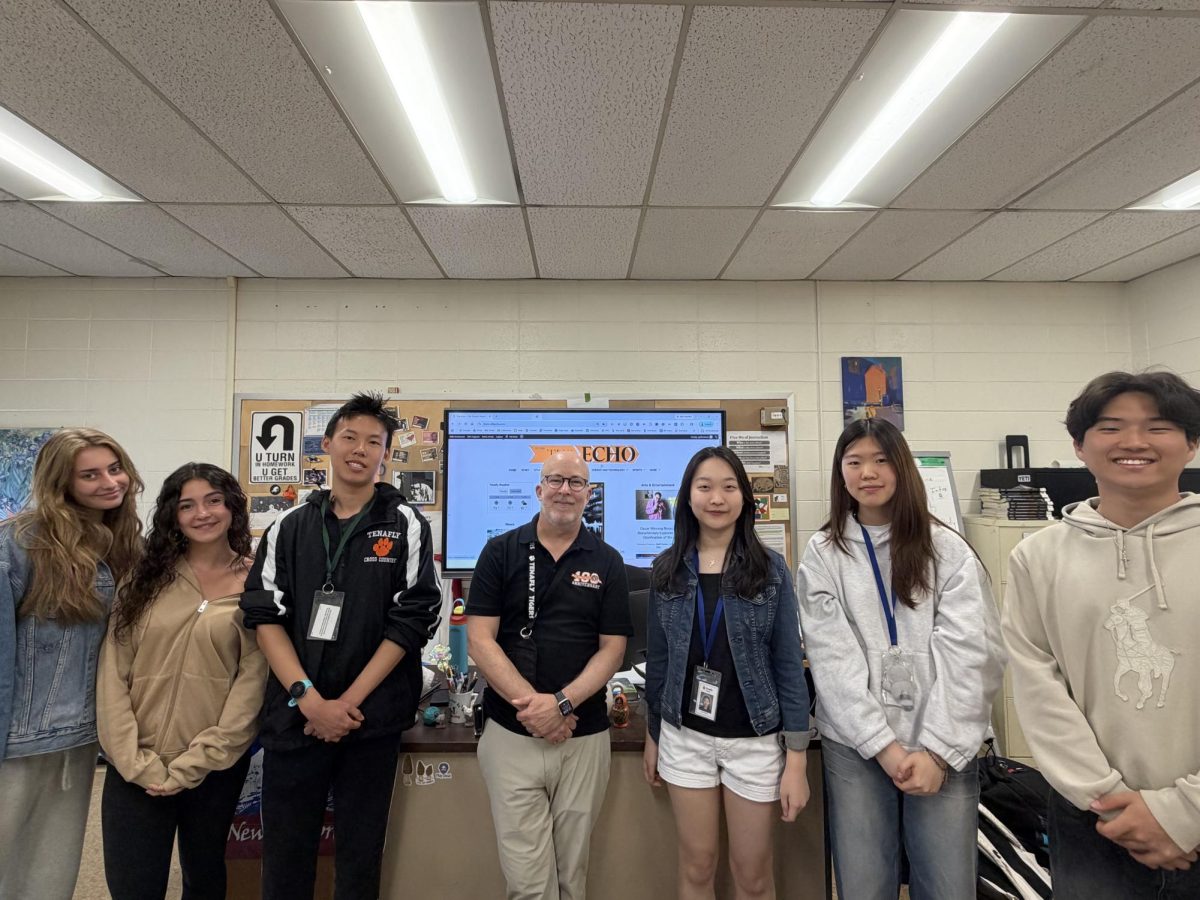
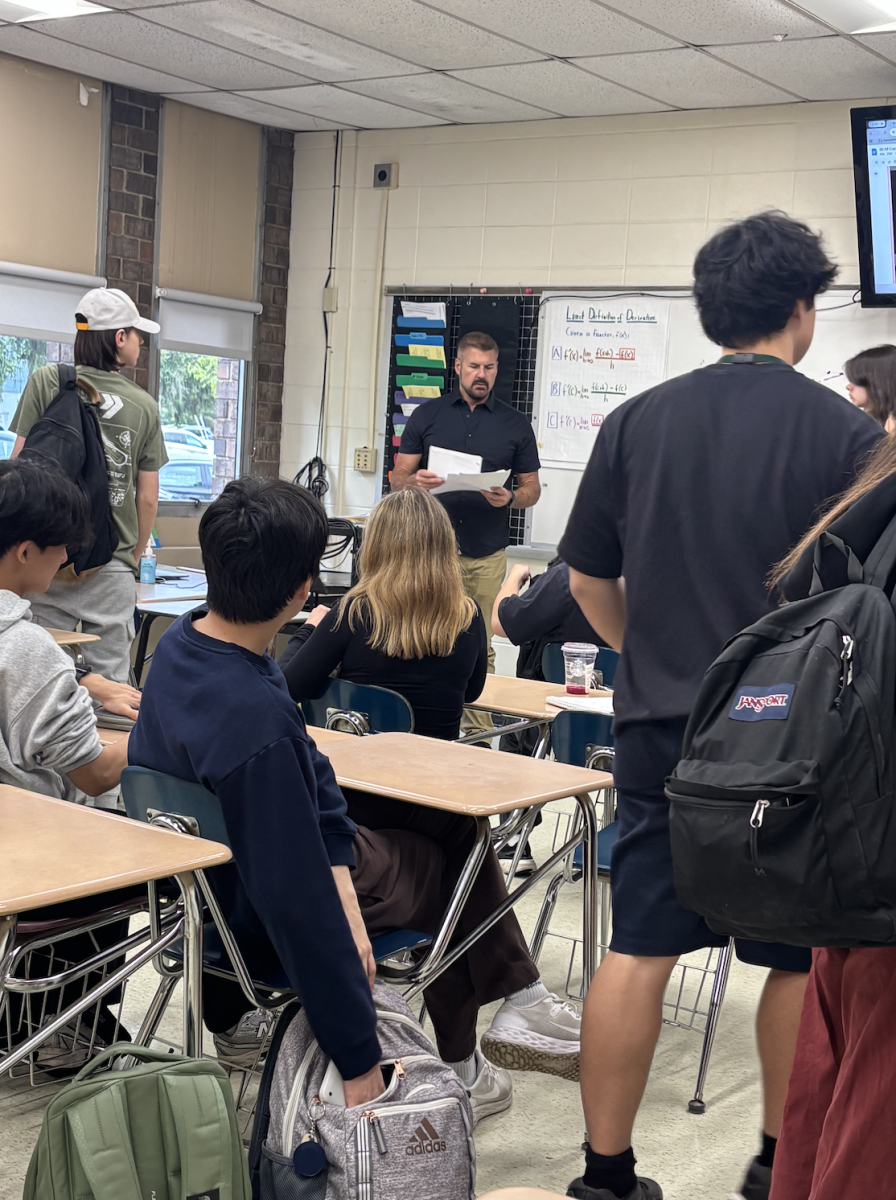
As The Echo celebrates its 130th anniversary, it does so on the cusp of transition: Mr. Gary Whitehead—THS English teacher since 1997, Echo advisor since 2016, and indefatigable steward of student voices—will retire following the 2025–2026 school year. His tenure has overseen one of the most consequential transformations in the paper’s history: the shift from print to fully digital publication.
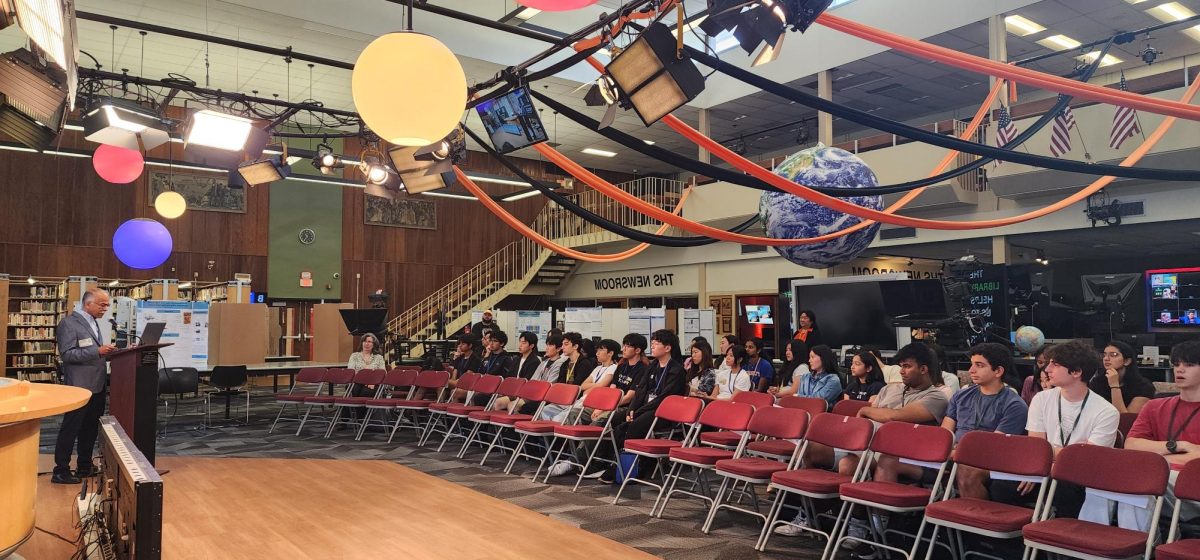
“One advantage of going digital was that it opened up The Echo to many more students than in previous years,” Whitehead said. In the print era, fewer than six students typically staffed the paper. Today, 91 students populate The Echo’s GroupMe—a messaging platform humming with pitch ideas, verifications for attributions, and last-minute clarifications on not to put pieces on Pending (if you know, you know…).
While print editions once reached several hundred readers, site analytics now show over 140,000 visitors and more than 114,000 stories read in the past year alone. The Echo has become more efficient, too. Stories that once appeared weeks after events now surface within days—or even hours. And yet, something ineffable shifted with the loss of paper publishing.
“There’s something pleasing about holding a piece of printed material,” Whitehead admitted. Old issues, pulled from classroom archives, still elicit a kind of reverent wonder. A decade-old digital story, by contrast, looks deceptively contemporary—its permanence flattened into the uniform glow of a screen. Print ages; pixels persist without patina.
Whitehead speaks of this evolution without nostalgia curdling into bitterness. The mission, he insists, has not wavered: to provide a forum for students to express opinions, report news, and entertain the school community. The format has changed, but the hearts behind it have not.
He preserved tradition where he could. The Echo style guide demonstrating rules such as placing graduation years in parentheses on first mentions (which we have dutifully done for this article, too) remains. In addition, the orange, black, and white Echo banner, commissioned in 2016, still crowns the homepage.
“[The logo] remains to this day as our front-page header,” Whitehead said. “I hope that tradition continues when I’m gone.”
In an era Whitehead describes as rife with “AI slop,” he hopes future writers will cling to accuracy, fairness, originality, and style.
“It excites me that so many THS students are passionate about journalism, and [during the] time I’ve been advising The Echo, I’ve seen a number of students go on to major in journalism in college despite the grim job prospects for journalists,” he said. “This gives me hope that the First Amendment will survive and that writers will continue to speak truth to power. I know that the growth of The Echo club has created a strong sense of community and belonging, for many students have told me so.”
Whitehead attributes the Journalism classes as part of this increased interest: “The Journalism classes have also fed that enthusiasm, since students in those sections are more deeply immersed through the writing assignments, films we watch, topics we discuss, and projects they complete.”
After decades of teaching, what continues to surprise him is student awareness, placing it in parallel with early editions of The Echo articles.
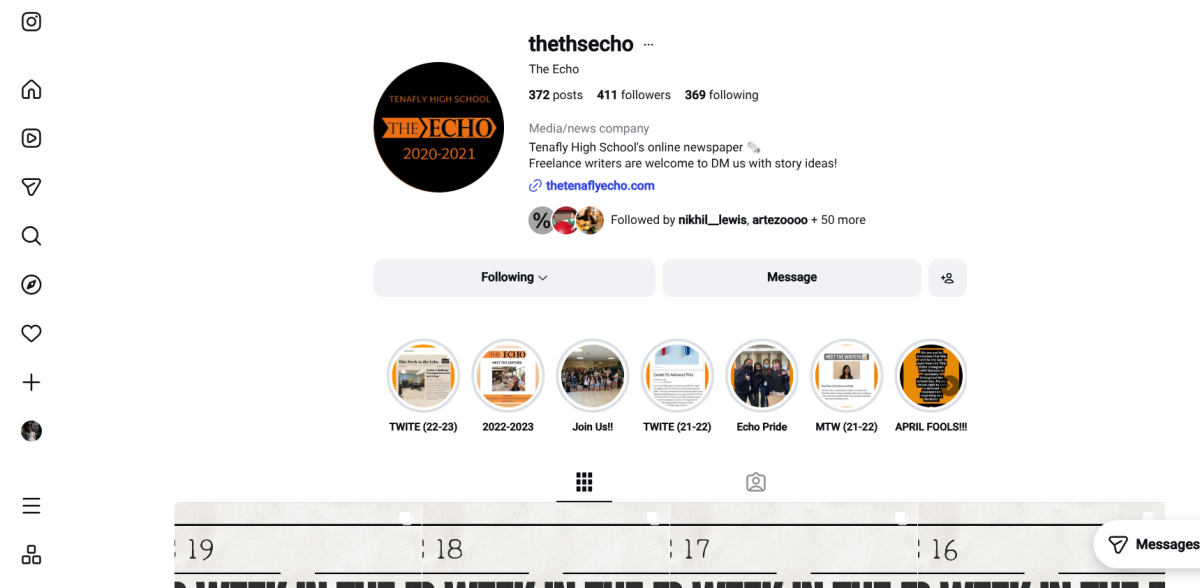
“In any given year, there has probably been a range in the quality of writing, with more experienced and older writers having more practice at the craft, or with some students just being naturally gifted stylists and others not,” Whitehead said. “I’d like to think that, nowadays, the editorial team promotes and encourages excellence, and that with pieces so highly scrutinized in the digital format and because of the weekly This Week in The Echo (TWITE) blast emails, students are striving for high quality. Looking back at the earliest copies of The Echo, we see that students wrote for that publication from a wide range of grades, too, since the paper was published in the days when students of all grades were in one building.”
“Some [students] don’t really realize how good they are [at writing],” Whitehead said—a hidden testament to the advisor who has spent years coaxing that realization into existence.
The Echo’s mission of delivering the best journalistic writing by students of THS continues under the leadership of its current editors and an expansive editorial staff. While alumni represent the paper’s legacy, today’s officers represent its momentum.
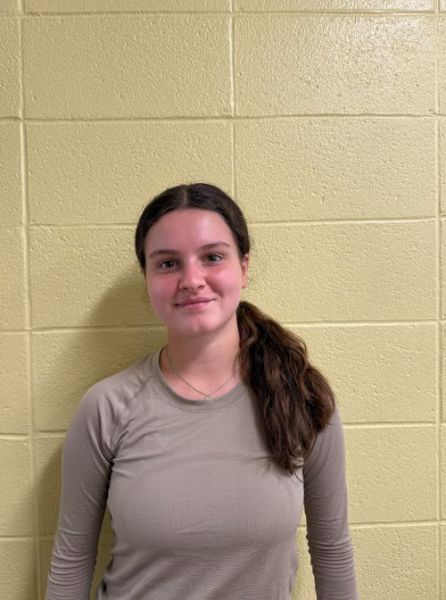
For Orli Rosenstein (’26), The Echo’s current Co-Editor-in-Chief, editing is about witnessing development in real time. That evolution reflects what The Echo has always promised: a space where students can refine both their voice and their confidence.
“I hope future members continue to voice their opinions, even if it means speaking out for something that may be controversial,” she said. “Being that this is our student newspaper, I think it’s important that students feel safe and excited to voice their opinions, so I hope that continues in the future.”
Her emphasis on both security and excitement captures the balance modern student journalism must maintain. The newsroom should feel welcoming, yet it should also encourage tenacity and integrity. A newspaper thrives when writers feel empowered to explore complex topics with thoughtfulness and integrity.
Calvin Du (’26), also an Editor-in-Chief, approaches submissions with equal parts openness and rigor. When carrying out his role, Du focuses on depth and precision.
“When editing pieces, I ask myself whether the piece covers its topic in enough detail, or if there is room to expand and add depth to the piece,” he said. “I also place a heavy emphasis on making sure all quotes and sources are properly attributed. When I make corrections for improper attribution or grammar, I tend to add comments explaining what the writer should do for future articles. We don’t want the same mistakes to be repeated!”
That final statement highlights the purpose behind editorial feedback. Corrections are not merely about polishing a single article for a single week. They are about building stronger writers over time.
The current editorial staff reflects the continuity that has defined The Echo for 130 years. Alumni may move on to college newsrooms and professional programs, and advisors may eventually retire (although Mr. Whitehead, you’ll be missed so very much by both present and past students), but the responsibility of shaping each week’s stories rests in the hands of students. With every submission reviewed and every edit suggested, the next chapter of The Echo is quietly taking shape.
One hundred thirty years ago, a group of students decided Tenafly was worth documenting. Since then, thousands of bylines have come and gone, each one capturing a fragment of Tenafly at a specific moment in time. Together, those fragments form something larger than any single article.
The Echo has never belonged to just one editor, one advisor, or one graduating class. It belongs to the students willing to ask questions, to revise one more paragraph, to press publish even when their heads swim with questions. It belongs to the readers who open the weekly TWITE and see their community reflected back at them.
A century from now, today’s stories will be in the archives. The names on the masthead will be different. But the act will remain the same: students paying attention, and in doing so, shaping the record of their time—an echo whose impact will continue to reverberate far beyond these halls and into the wider world we inhabit and believe in.